

前言
Java 8 中提供了許多函數式接口,包括Function、Consumer、Supplier、Predicate 等等。這 4 個接口就是本篇將要分享的內容,它們都位於 java.util.function 包下。
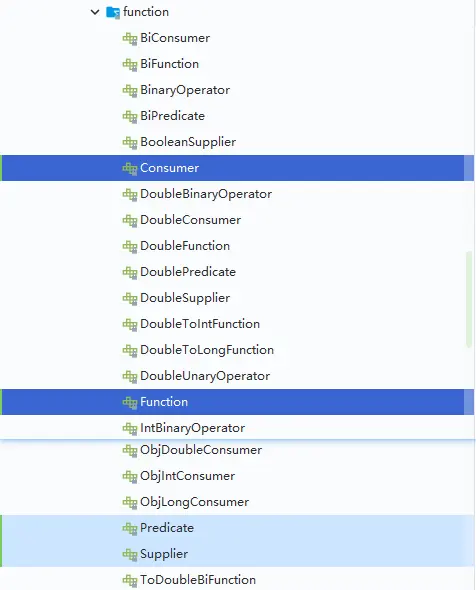
為什麼需要知道這幾個函數式接口?
因為這 4 個函數式接口是 Java 8 中新增的重要接口,同時 Java 8 的 Stream 新特性,也有用到這些接口,所以學習它們可以幫助我們更好地理解 Stream 流。
也正因為這是函數式接口,所以就可以使用 Lambda 表達式來寫接口的實現邏輯。而且學習的過程中可以更好地理解函數式編程的思想。
Function 接口
説明
Function 這個單詞的意思就有「函數」的意思,就數學中的 y = f(x),接收一個 x 參數,通過函數 f 運算後,返回一個結果 y。
Function 接口包含四個方法:
apply(T t):這是Function接口的主要方法,它接收一個參數並返回一個結果。同時它也是唯一的抽象的方法,剩下的都是有默認實現的(Java 8 中接口的抽象方法支持默認實現)。andThen(Function after):作用是將兩個Function組合。首先執行當前函數,再執行andThen函數,並將當前函數的結果作為參數傳遞給andThen函數。compose(Function before):同理,將兩個Function組合,將先執行compose函數,再執行當前函數,並將compose函數的結果作為參數傳遞給當前函數。identity(): 返回一個執行恆等轉換的函數,即返回輸入參數本身。
Function 接口通常用於將一個類型的值轉換為另一個類型的值。
apply 方法
// Function 接口的泛型,第一個參數是入參類型,第二個參數是出參類型
// Function 接口只有一個抽象方法,就是 apply(),下面利用 Lambda 表達式實現這個抽象方法並創建 Function 對象
Function<Integer, String> function = num -> "GTA" + num;
// 將5這個參數傳遞給function,得到返回結果
String result = function.apply(5);
System.out.println(result); // 打印:GTA5
andThen 和 compose 方法
// 定義兩個 Function 對象進行相關轉換操作
Function<String, String> upperCase = s -> s.toUpperCase();
Function<String, String> addPostfix = s -> s + "5";
// 鏈式調用,將 gta 這個字符串參數先傳遞 upperCase 這個函數進行操作,然後將得到的結果傳遞給 addPostfix 函數進行操作,得到返回結果
String str = upperCase.andThen(addPostfix).apply("gta");
System.out.println(str); // 打印:GTA5
identify 方法
identity 方法返回一個執行恆等轉換的函數,該函數將輸入參數原樣返回。例如:
Function<String, String> identity = Function.identity();
String result = identity.apply("hello"); // result is "hello"
Consumer 接口
説明
Consumer 這個單詞的意思就有「消費者」的意思,就把入參消費了,並不會返回結果給你。
Consumer 接口包含兩個方法:
accept(T t):該方法接受一個參數並執行一些操作。andThen(Consumer after):同理,將兩個 Consumer 組合,先後進行消費。
accept 方法
Consumer 接口通常用於消費一個參數然後執行一些操作。例如:
// Consumer 接口,泛型參數是入參類型,接受一個參數,並不返回結果,相當於消費了這個參數
Consumer<String> consumer = s -> System.out.println(s);
consumer.accept("我輸入什麼就打印什麼"); // 打印:我輸入什麼就打印什麼
andThen 方法
組合兩個 Consumer:
Consumer<String> first = s -> System.out.println(s + 5);
Consumer<String> second = s -> System.out.println(s + 6);
// 先執行 first 這個 Consumer,接着執行 second 這個 Consumer
Consumer<String> combination = first.andThen(second);
combination.accept("GTA"); // 打印:GTA5 GTA6
Supplier 接口
Supplier 接口只定義了一個 get() 方法,該方法不接受任何參數並返回一個結果。
Supplier 這個單詞的意思就有「供應者」的意思,給我的感覺就是生產者,不用參數,直接生產一個東西給你。
Supplier 接口通常用於生成一個值。例如:
// Supplier 接口,泛型參數是出參類型,不接受參數,但是會提供結果,相當於生產了某個東西
Supplier<String> supplier = () -> "提供一個我隨便打的字符串給調用方";
String text = supplier.get();
System.out.println(text); // 打印:提供一個我隨便打的字符串給調用方
Predicate 接口
説明
Predicate 這個單詞的意思就有「預言,預測,謂語,謂詞」的意思,就是用來預測判斷的。
Predicate 接口包含四個方法:
test(T t):該方法接受一個參數並返回一個布爾值。and(Predicate other):與另一個 Predicate 進行組合,實現邏輯與操作。negate():與另一個 Predicate 進行組合,實現邏輯非操作。or(Predicate other):與另一個 Predicate 進行組合,實現邏輯或操作。
test 方法
Predicate 接口通常用於測試一個條件是否成立。例如:
// Predicate 接口,泛型參數是入參類型,返回布爾值
Predicate<String> predicate = s -> s.contains("god23bin");
boolean flag = predicate.test("god23bin能給你帶來收穫嗎?");
System.out.println("god23bin能給你帶來收穫嗎?" + flag); // 打印:god23bin能給你帶來收穫嗎?true
and 方法
為了便於演示,這裏準備兩個 Predicate:
Predicate<String> startsWithA = (str) -> str.startsWith("A"); // 如果傳入的字符串是A開頭,則返回 true
Predicate<String> endsWithZ = (str) -> str.endsWith("Z"); // 如果傳入的字符串是Z結尾,則返回 true
使用 and 進行組合,與操作:
Predicate<String> startsWithAAndEndsWithZ = startsWithA.and(endsWithZ);
System.out.println(startsWithAAndEndsWithZ.test("ABCDEFZ")); // true
System.out.println(startsWithAAndEndsWithZ.test("BCDEFGH")); // false
negate 方法
使用 negate 進行組合,非操作:
Predicate<String> notStartsWithA = startsWithA.negate();
System.out.println(notStartsWithA.test("ABCDEF")); // false
System.out.println(notStartsWithA.test("BCDEFGH")); // true
or 方法
使用 or 進行組合,或操作:
Predicate<String> startsWithAOrEndsWithZ = startsWithA.or(endsWithZ);
System.out.println(startsWithAOrEndsWithZ.test("ABCDEF")); // true
System.out.println(startsWithAOrEndsWithZ.test("BCDEFGH")); // false
那這些接口有什麼應用呢?
在 Stream 流中就有應用上這些函數式接口。當然,當你有相似的需求時,你自己也可以應用上這些接口。下面説下 Stream 流中的應用。
Function 接口:例如 map 方法,map 方法就是將一個類型的值轉換為另一個類型的值。
// map 方法,將 T 類型的值轉換成 R 類型的值
// R 是返回的 Stream 流的元素類型,T 是原先 Stream 流的元素類型
<R> Stream<R> map(Function<? super T, ? extends R> mapper);
Consumer 接口:例如 forEach 方法
// forEach 方法,遍歷 Stream 流中的元素,T 類型是 Stream 流的元素類型
void forEach(Consumer<? super T> action);
Supplier 接口:例如 generate 方法
// 生成一個無限長度的 Stream 流
public static<T> Stream<T> generate(Supplier<T> s) {
    Objects.requireNonNull(s);
    return StreamSupport.stream(
        new StreamSpliterators.InfiniteSupplyingSpliterator.OfRef<>(Long.MAX_VALUE, s), false);
}
Predicate 接口:例如 filter 方法,使用 Predicate 進行過濾操作。
// 過濾出 Stream 流中,判斷結果為 true 的元素
Stream<T> filter(Predicate<? super T> predicate);
最後的最後
希望各位屏幕前的靚仔靚女們給個三連!你輕輕地點了個贊,那將在我的心裏世界增添一顆明亮而耀眼的星!
咱們下期再見!